
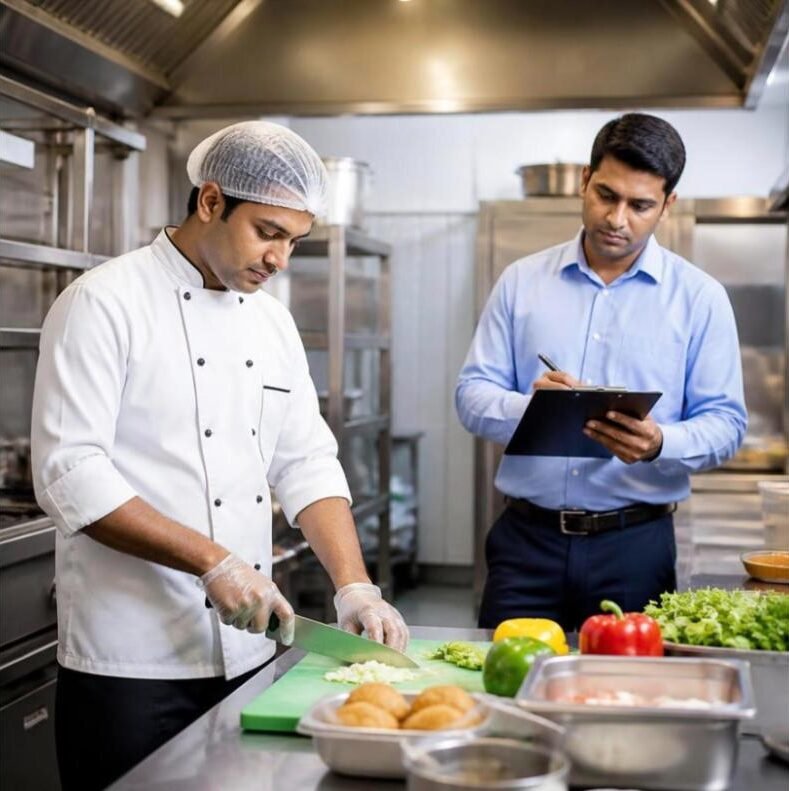
22 November 2026 · By Gaurav Butola, Lead, Operations, Compliance Support Services
Opening a restaurant in Delhi needs fewer permissions in 2026 than it did two years ago, but the list is still longer than most first-time owners expect. Every restaurant needs an FSSAI registration or licence, GST registration, and registration under the Delhi Shops and Establishments Act. Most also need a health trade licence from the municipal body. A fire NOC is needed once the restaurant seats 50 or more, DPCC consent depends on size and equipment, and serving alcohol needs an excise licence. The Delhi Police eating house licence is no longer required.
The order matters as much as the list. Fire clearance comes before the municipal licence, and the municipal licence and FSSAI come before any liquor licence. Get the sequence wrong and you pay rent on a premises you cannot open.
Restaurant licences in Delhi at a glance
| Licence or registration | Issued by | When you need it |
|---|---|---|
| FSSAI registration, State licence or Central licence | Food Safety Department, Delhi, or FSSAI | Always, before you serve food |
| Health trade licence | MCD (or NDMC or Delhi Cantonment Board, by location) | MCD areas, before opening |
| Fire NOC (Fire Safety Certificate) | Delhi Fire Service | Seating or occupancy of 50 or more |
| Shops and Establishments registration | Labour Department, GNCTD | Always, online and free |
| GST registration | GST Department | Turnover above the threshold, or from day one if you sell through delivery apps |
| DPCC consent to establish and operate | Delhi Pollution Control Committee | Depends on seating, kitchen and DG set |
| Excise licence (L-17 and related) | Excise Department, GNCTD | Only if you serve liquor |
| Music licences | Copyright societies and owners | If you play recorded music |
What changed in 2025 and 2026
Three reforms have reshaped the Delhi restaurant licence.
The Delhi Police eating house licence is gone. In June 2025 the Lieutenant Governor withdrew the power of the Delhi Police to issue eating house registration for restaurants, hotels and similar businesses. Licensing now sits with the local bodies, namely MCD, NDMC and the Delhi Cantonment Board. Older guides that still list a police licence, CCTV conditions under the Delhi Police Act or a police NOC are out of date.
FSSAI thresholds moved sharply upward from 1 April 2026. A restaurant with annual turnover up to Rs 1.5 crore now needs only basic registration. A State licence applies above Rs 1.5 crore and up to Rs 50 crore, and a Central licence above Rs 50 crore. The earlier limits were Rs 12 lakh and Rs 20 crore. Registrations and licences issued from that date also carry perpetual validity, subject to annual returns and risk-based inspection, so the old cycle of renewals is ending for new applicants.
The municipal health trade licence has been simplified, though not abolished in MCD areas. In the NDMC area, which covers Connaught Place, Khan Market and much of central Delhi, a valid FSSAI registration or licence is now treated as the health trade licence, and no separate municipal permit is needed. In MCD areas, which cover most of the city, the health trade licence continues in a revised form. You apply with your FSSAI certificate, pay the MCD fee, and no inspection is carried out at the application stage.
FSSAI: the licence every restaurant needs
FSSAI is the starting point because almost every other department asks for it. Apply on the FoSCoS portal. The category depends on your projected annual turnover, not your seating, so a busy 40-seat cafe can need a State licence while a quiet 80-seat restaurant needs only registration. Be realistic about turnover. Operating under registration when your turnover calls for a licence is a breach in itself.
At least one supervisor per outlet should hold FoSTaC food safety training. Display the FSSAI certificate at the entrance and print the number on your menu, bills and delivery app listings.
Health trade licence from MCD
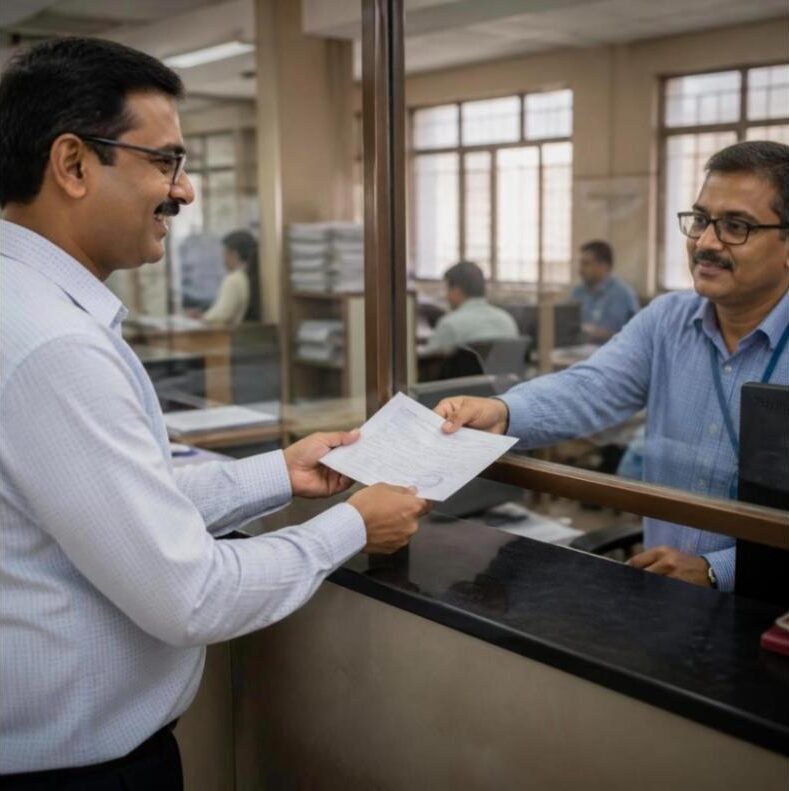
The health trade licence is issued under the Delhi Municipal Corporation Act, 1957 and covers the premises rather than the food. Applications go through MCD’s unified health trade licensing portal. Keep the site plan, ownership or lease documents, the FSSAI certificate and, where required, the fire NOC ready.
Two practical points catch new owners. MCD requires the fire NOC first wherever the trade needs one, so a restaurant seating 50 or more cannot complete the health trade licence until Delhi Fire Service has cleared it. And the health trade licence stays valid only as long as the fire clearance does, so a lapsed fire certificate puts the municipal licence at risk too.
Fire NOC and the 50-seat line

Under the Delhi Fire Service Rules, 2010, read with the Unified Building Bye-Laws for Delhi, 2016 and the National Building Code, a restaurant with seating of 50 or more is an assembly occupancy and needs a Fire Safety Certificate. Below that, no fire NOC is required, though fire extinguishers, clear exits and electrical safety are still expected.
The Delhi High Court applied this line in April 2026 in a batch of petitions by Khan Market restaurants, including Perch, a unit of Sunrise F and B Restaurant Pvt Ltd v. NDMC (W.P.(C) 5706/2021, decided on 10 April 2026). It held that the restaurants could not be denied operation only for want of a fire NOC as long as they kept occupancy below 50 at any time. The relief was tied to undertakings on occupancy. It is not a general licence to ignore fire safety, and an inspector will count guests, not chairs.
In May 2026 Delhi Fire Service notified amendments to its Rules providing for empanelled third-party fire safety auditors. Expect fire certification to move increasingly through these auditors.
Shops and Establishments registration

Every restaurant must register under the Delhi Shops and Establishments Act, 1954. The application is online on the Labour Department portal, it is free, and the certificate is issued without inspection. The Labour Department has also done away with mandatory renewal. Companies incorporating in Delhi can opt for this registration at incorporation itself through the MCA form.
The Delhi Shops and Establishments (Amendment) Act, 2026 has been published but has not yet been brought into force. Until it is, the 1954 Act and its rules continue to apply, including the conditions for staying open late or employing women at night.
GST registration
A restaurant whose turnover crosses the GST threshold for services must register. If you plan to sell through Zomato, Swiggy or any other platform, register from the start. The platforms collect and deposit GST on food orders placed through them, and most will ask for your GSTIN before listing you. Most standalone restaurants charge GST at 5 percent without input tax credit, so build that into menu pricing from the first day.
DPCC consent

The Delhi Pollution Control Committee regulates restaurants as a source of air and water pollution. Whether you need consent to establish and consent to operate, and in which category, depends on seating capacity, the kitchen exhaust and whether you run a diesel generator. Larger restaurants are inspected for chimney height, oil and grease traps and connection to the sewer. Check your category with DPCC before you finalise the kitchen design, because retrofitting a chimney or grease trap after fit-out is expensive.
Liquor licence: L-17 and related licences
A restaurant that wants to serve alcohol applies to the Excise Department under the Delhi Excise Act, 2009 and the Delhi Excise Rules, 2010. The L-17 licence covers independent restaurants serving liquor for consumption on the premises, with related categories such as L-17F for foreign liquor. For the 2026-27 licensing year the government extended the existing excise policy and raised licence fees for these categories by 10 percent.
The excise application relies on your FSSAI licence, health trade licence and, where applicable, fire clearance. Apply for the bar licence only after those are in hand. The legal drinking age in Delhi remains 25, and serving anyone younger is one of the commonest grounds for action against a licensee.
Music, signage and the smaller permissions
Playing recorded music in a restaurant is a public performance, and it needs licences from the bodies that hold the rights in the sound recordings and the underlying songs. Live performances may need separate permissions. A signboard on the facade can need municipal permission depending on its size and location. If the building has a lift, the lift needs its own licence. And register your restaurant’s name as a trade mark early, before you spend on branding and someone else files first.
A sensible order of work
Check the property before you sign the lease. Confirm that the zoning and the building’s approved use allow a restaurant, and decide whether you will seat fewer than 50 or more, because that single decision drives the fire, municipal and pollution requirements. Then apply for FSSAI, Shops and Establishments registration and GST together, as none depends on the others. Obtain the fire NOC if your seating needs one, then the health trade licence in MCD areas, and DPCC consent alongside. Apply for the liquor licence last.
Budget time as well as money. FSSAI registration and Shops and Establishments registration can come through within days. Fire clearance, DPCC consent and the excise licence take weeks and depend on site inspections, so plan your launch date around them, not around the fit-out.
Frequently asked questions
Is the Delhi Police eating house licence still required for a restaurant?
No. The requirement was withdrawn in June 2025. Licensing of restaurants now rests with MCD, NDMC or the Delhi Cantonment Board, depending on location.
Do I need both FSSAI and a health trade licence in Delhi?
In MCD areas, yes, though the health trade licence application now relies on your FSSAI certificate and involves no inspection at the application stage. In the NDMC area, a valid FSSAI registration or licence is treated as the health trade licence.
Which FSSAI licence does a restaurant need in 2026?
From 1 April 2026, registration if annual turnover is up to Rs 1.5 crore, a State licence above Rs 1.5 crore and up to Rs 50 crore, and a Central licence above Rs 50 crore.
Is a fire NOC required for a small restaurant in Delhi?
Not if seating and occupancy stay below 50. A restaurant seating 50 or more needs a Fire Safety Certificate from Delhi Fire Service.
Which licence does a restaurant need to serve alcohol in Delhi?
An excise licence from the Excise Department, usually the L-17 licence for an independent restaurant, with L-17F for foreign liquor. It is granted only after the food and municipal licences are in place.
Do I have to renew my Shops and Establishments registration?
No. Registration under the Delhi Shops and Establishments Act, 1954 is online and free, and the Labour Department has removed the requirement to renew it.
This note reflects the position as of 22 November 2026. Fees, thresholds and procedures are revised from time to time, so confirm the current position with the relevant department before applying. Compliance Support Services handles restaurant licensing across Delhi, from FSSAI and the health trade licence to fire clearance, DPCC consent and excise. Talk to us before you sign the lease.